Potted Succulent 3D Shadow Box Review
As a designer who spends more time looking at stitch density and thread tension than I do drinking coffee, I have learned to be skeptical of any design that promises too much. When I first pulled up the Potted Succulent 3D Shadow Box Paper Cut, my initial reaction was one of cautious curiosity. The description mentions a "wild west cowboy era" vibe and a "grand star," which immediately raises questions about thematic cohesion. Does this design actually work as a serious embroidery project, or is it just another novelty file destined to sit in a folder until someone buys it for a quick gift? After spending some time analyzing the layout, potential applications, and practical execution challenges, here is my honest breakdown of how this Cacti And Succulents themed piece performs in real-world scenarios.
First Impressions and Visual Personality
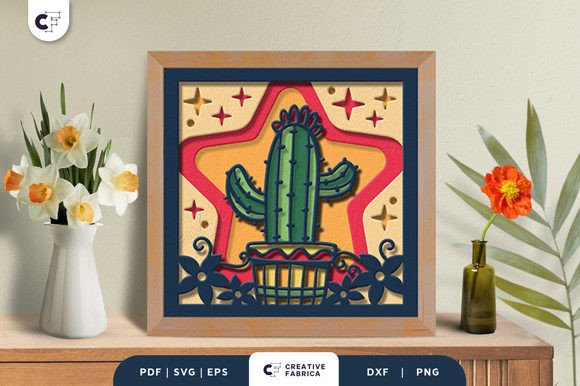
The concept behind the Potted Succulent 3D Shadow Box Paper Cut relies heavily on depth. In digital paper cutting, layers create dimension; in machine embroidery, we have to simulate that depth using stitch density, color blocking, and sometimes applique techniques. The inclusion of a grand star alongside the potted cactus suggests a rustic, perhaps southwestern aesthetic. This is not a minimalist botanical sketch; it is a statement piece.
For designers, the immediate appeal is its strong visual identity. It feels grounded and earthy, making it an excellent candidate for brands that want to convey warmth, resilience, or a connection to nature. However, the "shadow box" aspect implies a complex layering system. If you are planning to use this as a standard fill-stitch design, you need to be prepared for significant thread usage. The mood it creates is cozy yet bold—perfect for a home decor item but potentially overwhelming if placed on delicate baby clothing without careful sizing.
Real-World Application: Where Does It Fit?
I often test designs by imagining specific client requests. For the Potted Succulent 3D Shadow Box Paper Cut, the most natural fit is clearly in home decor and lifestyle accessories. Imagine a custom embroidered tote bag for a boutique garden center or a heavy-duty canvas apron for a craft fair vendor. The robust nature of the cactus theme pairs well with durable fabrics like denim, duck cloth, or thick cotton twill.
Another strong use case is sweatshirt embroidery. The western/star motif combined with the succulent pot creates a trendy, bohemian look that appeals to a wide demographic. On a heavyweight fleece or French terry hoodie, the design would pop, especially if you use contrasting thread colors. The "3D" effect mentioned in the title can be enhanced by using a mix of satin stitches for outlines and dense fill stitches for the body of the plant, creating a tactile experience that customers love to touch.
However, not every product is suitable. While it might look cute on a onesie, the complexity of a shadow box design can become muddy if the fabric is too thin or the hoop size is too small. For baby embroidery, simplicity usually reigns supreme. A detailed shadow box might feel too busy or even slightly harsh for nursery decor unless simplified significantly. Similarly, for an embroidered patch, the intricate details of the "paper cut" style might get lost if the patch is smaller than four inches.
Technical Challenges and Execution Risks
This is where my professional caution kicks in. The term "3D SVG" in the context of an embroidery file often requires interpretation. If this design relies on multiple layers of stitching to create depth, you must consider the stability of your fabric. Using this design on stretchy knits without proper stabilization can lead to puckering, ruining the crisp lines that make the "shadow box" effect visible.
Furthermore, the detail level inherent in a "paper cut" aesthetic means there are likely many small elements. On dark fabric, fine details can disappear into the background. I strongly advise testing this design in black and white mockups before committing to expensive threads. You need to ensure that the contrast between the cactus, the pot, and the star is distinct enough to read from a distance. If you are selling this as a small shop product, clarity is key. A buyer scrolling through Etsy needs to see the design clearly in a thumbnail image.
Another consideration is the stitch density. Designs with high density can cause needle breakage or thread jams if not optimized correctly. If the file contains excessive underlay stitches or overlapping satin stitches, it may take a long time to finish, impacting your profit margins. Always check the estimated stitch count and run time. If the design is overly dense for its visual payoff, it might be better suited for a wall hanging where time is less of a concern than durability.
Material and Stabilizer Recommendations
- Fabric Choice: Stick to stable woven fabrics like linen, canvas, or medium-weight cotton. Avoid thin silks or highly stretchy jerseys unless you are an advanced user with specialized hoops.
- Stabilizer: A cut-away stabilizer is non-negotiable for this type of design. The weight of the threads and the potential for movement during the "3D" simulation requires permanent support to prevent distortion over time.
- Thread Colors: Earth tones (greens, browns, terracottas) will enhance the natural look, while bright metallics could be used for the star to add a festive touch for holiday gifts.
Commercial Viability and Branding
For Etsy sellers and craft business owners, the Potted Succulent 3D Shadow Box Paper Cut offers a unique selling proposition. It bridges the gap between traditional botanical embroidery and modern graphic art. This makes it versatile for branding. You could use it on packaging tags, hangtags, or even as a logo element for a handmade brand focused on wellness or rustic living.
When creating printable mockups for your listings, focus on the texture. Show close-ups of the stitch work to demonstrate quality. Customers trust designs that look professionally executed. If the design appears cluttered or low-resolution in your photos, they will assume the physical product will too. By highlighting the "western" and "star" elements, you can target niche markets interested in cowboy culture, desert aesthetics, or Southwestern decor.
However, always confirm licensing terms before producing commercial embroidery items. Some digital files restrict the number of units you can sell or prohibit their use in mass production. Understanding these boundaries protects your reputation and keeps your business legal.
Final Verdict
The Potted Succulent 3D Shadow Box Paper Cut is a compelling design for those willing to put in the technical prep work. It is not a simple "hoop and go" file; it demands attention to fabric choice, stabilization, and color contrast. But when executed well, it results in a stunning handmade product that stands out in a crowded market.
I recommend starting with a scrap fabric test to dial in your tension and settings. Once you have mastered the execution, this design has the potential to elevate your offerings in categories like tote bag design, sweatshirt embroidery, and holiday embroidery. It is a solid addition to any designer’s library, provided you respect its complexity and plan your projects accordingly.